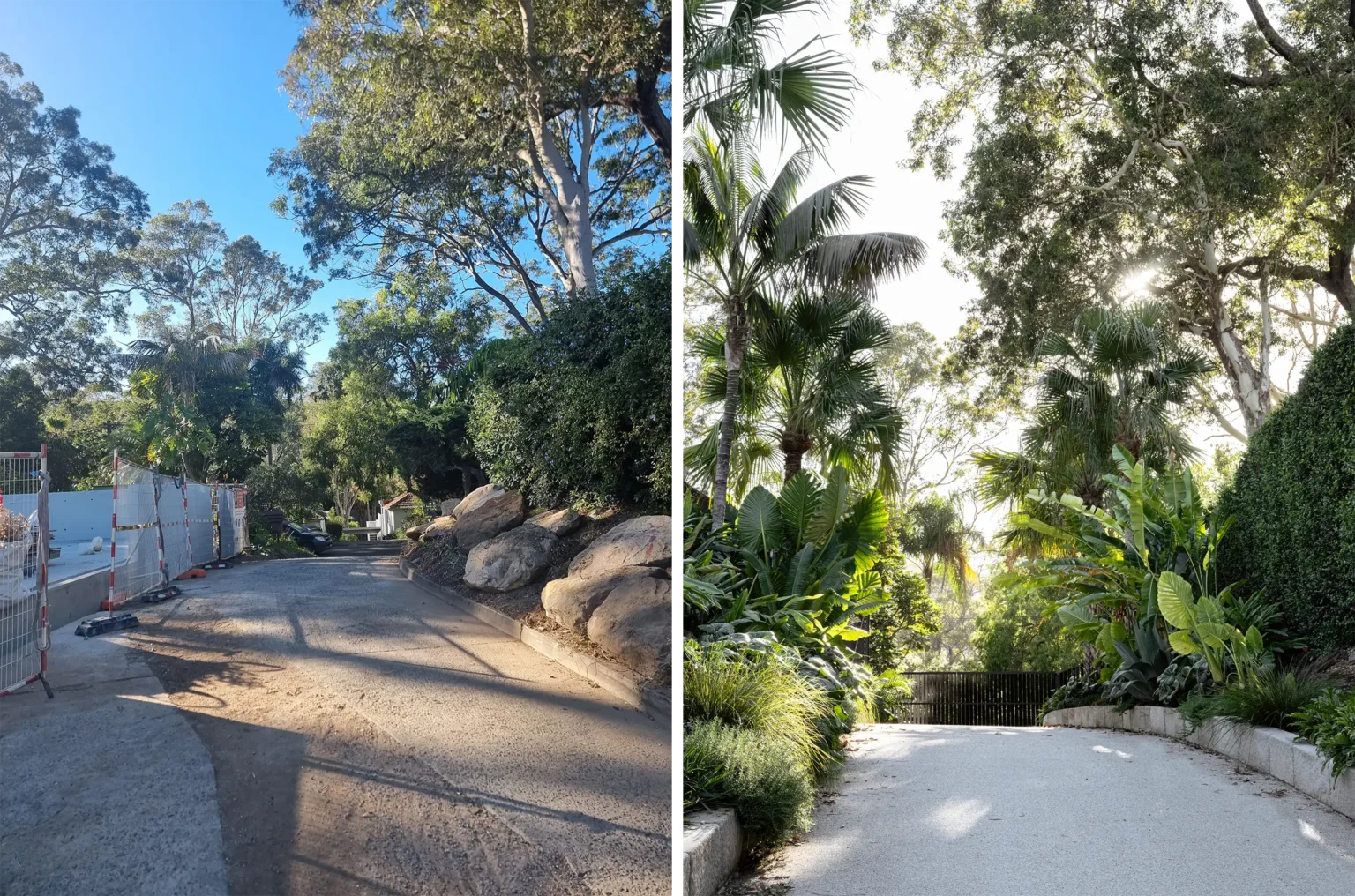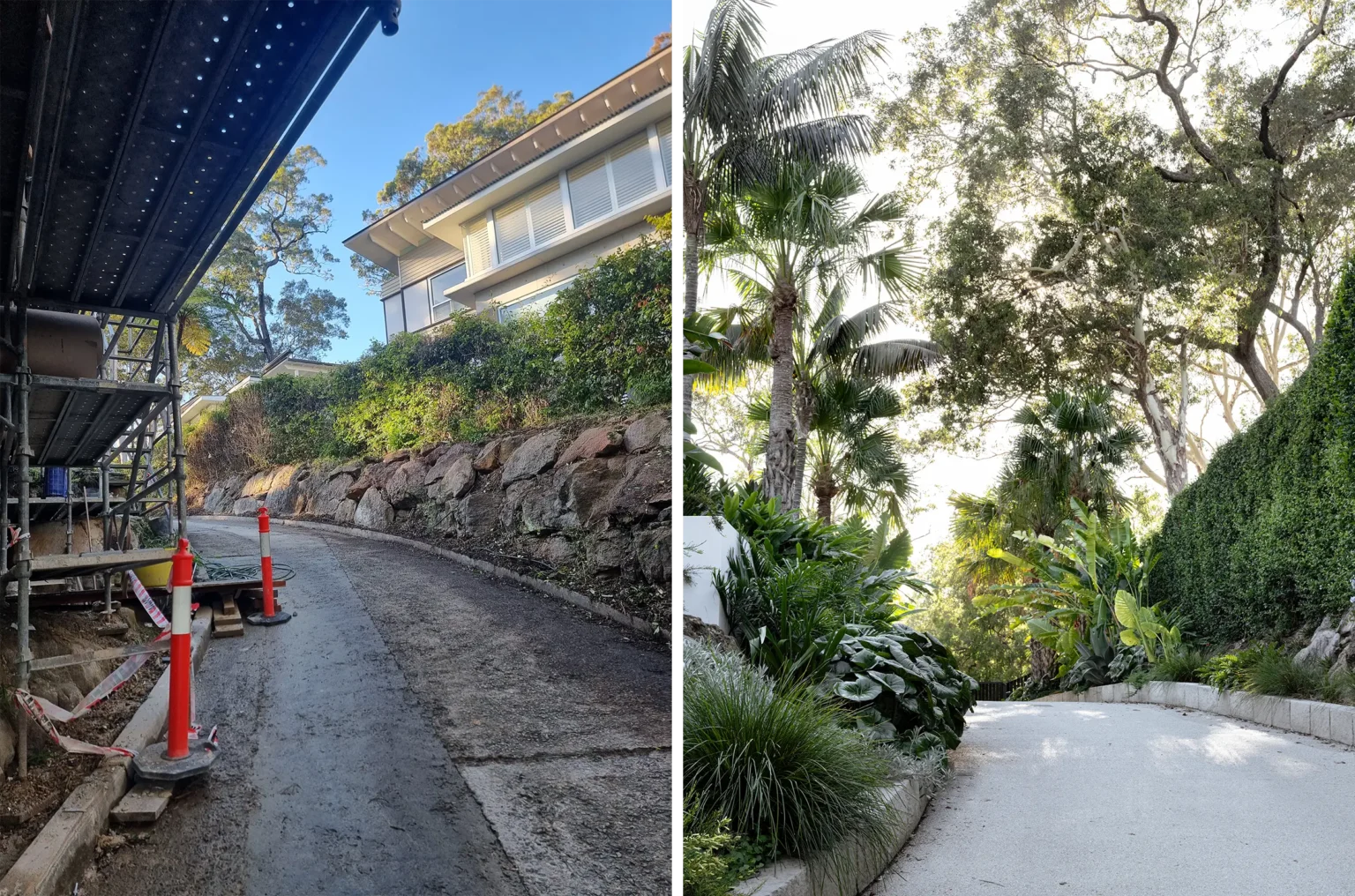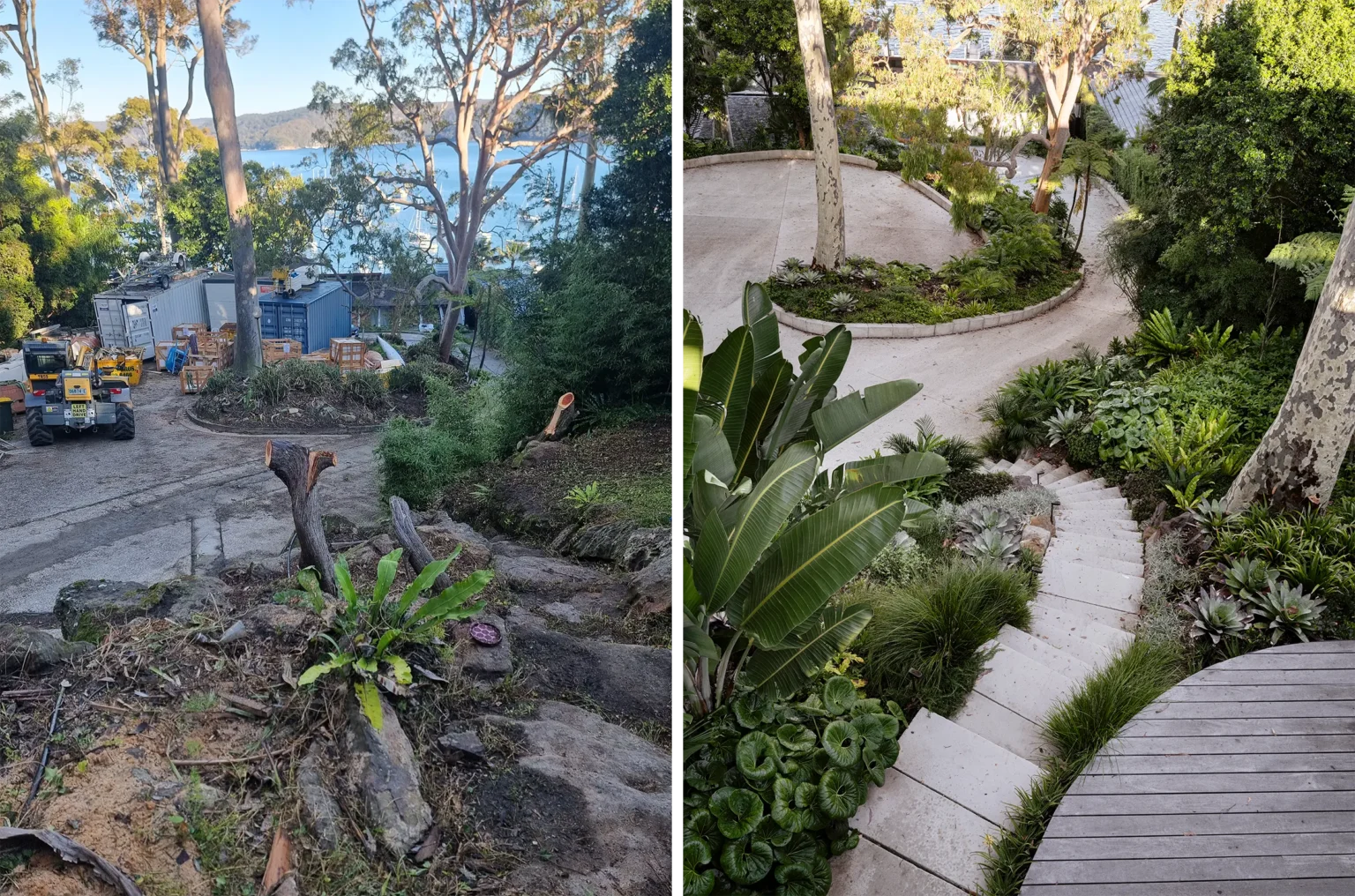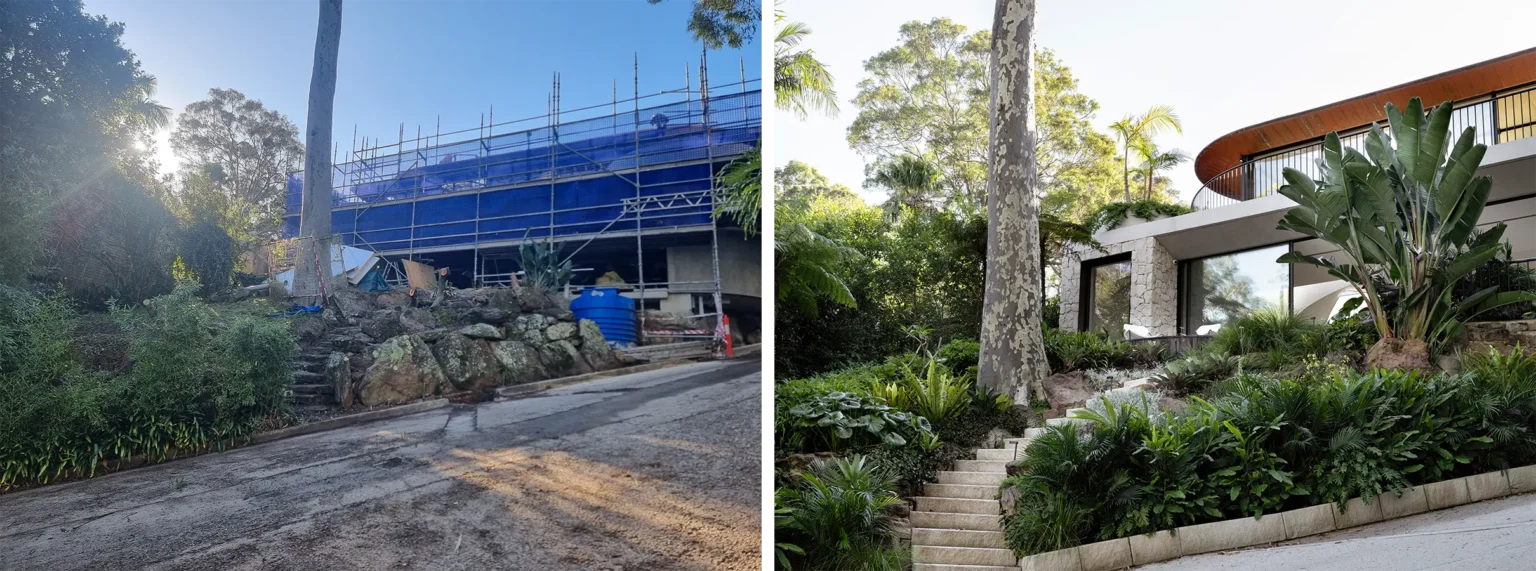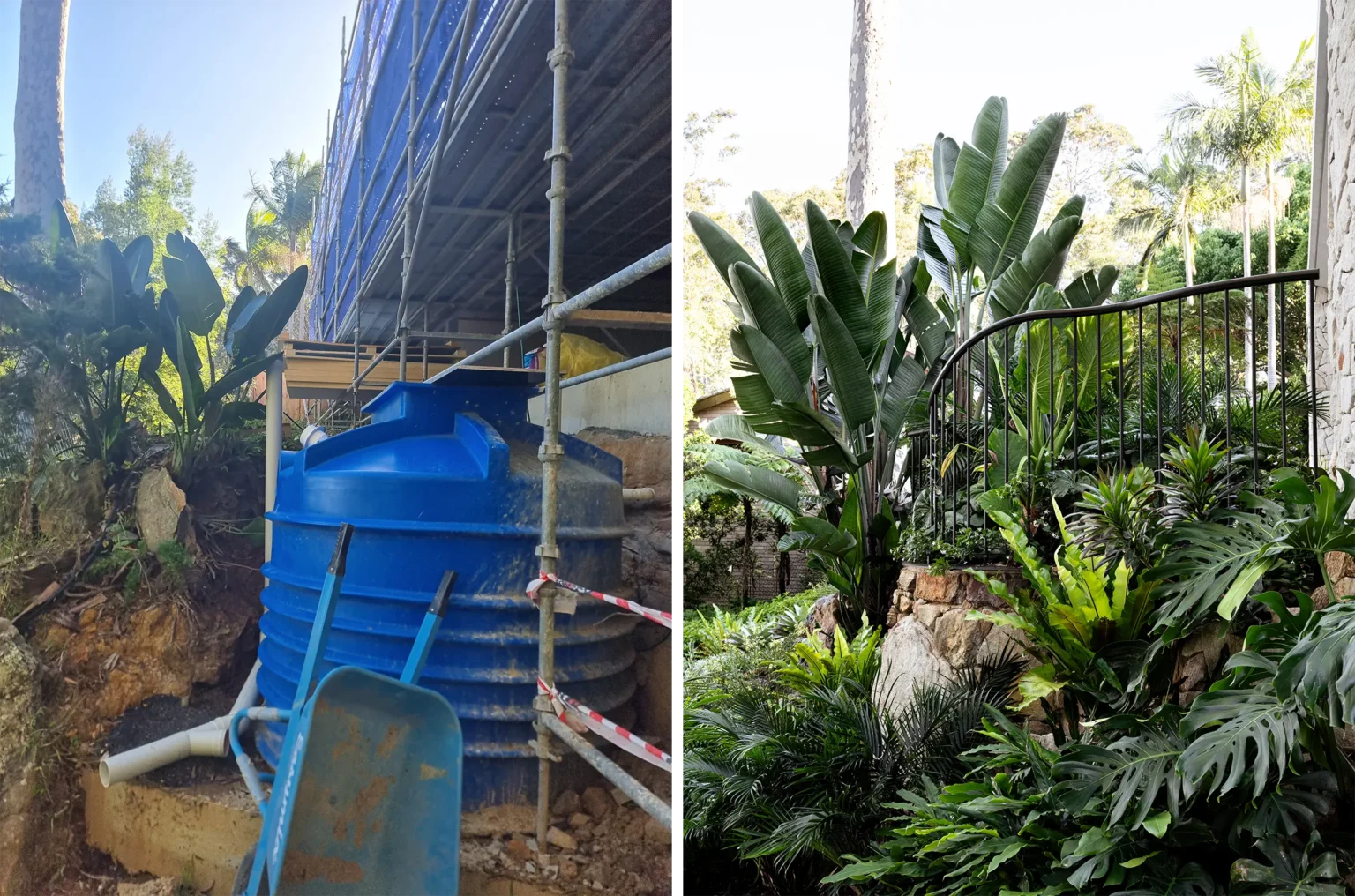
Avalon: Before & After
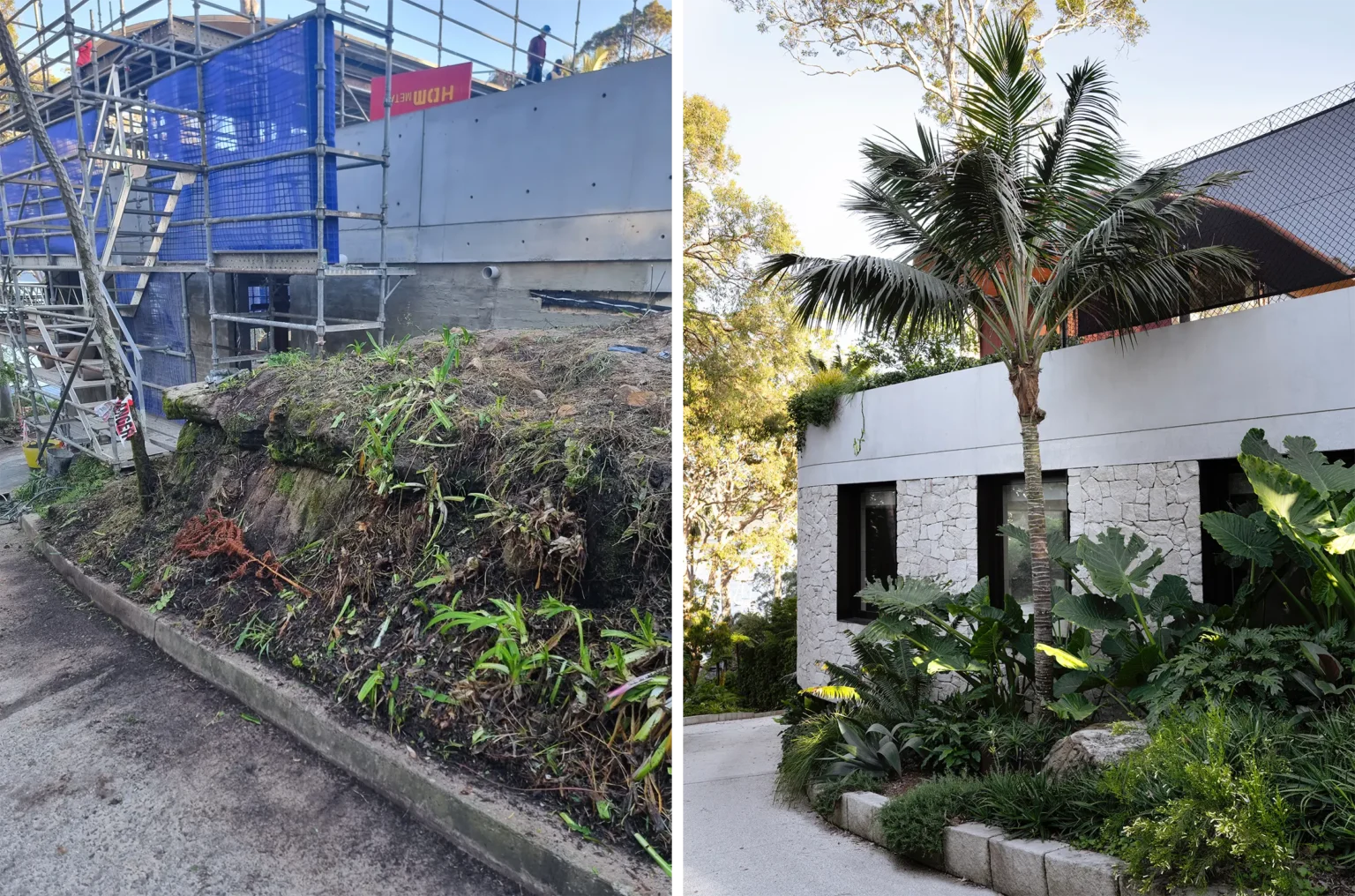
Nelson Thomas was engaged in collaboration with architects SJB to deliver a considered landscape design solution for the upper half of this luxury residential property. With a new tennis court and pavilion under construction, the driveway and surrounding landscape required thoughtful integration to create a cohesive and elevated arrival experience.
View before & afterThis project is a strong example of how strategic landscape architecture can overcome difficult site conditions while achieving a lush, established aesthetic.
DESIGNING A LANDSCAPE ON EXPOSED BEDROCK
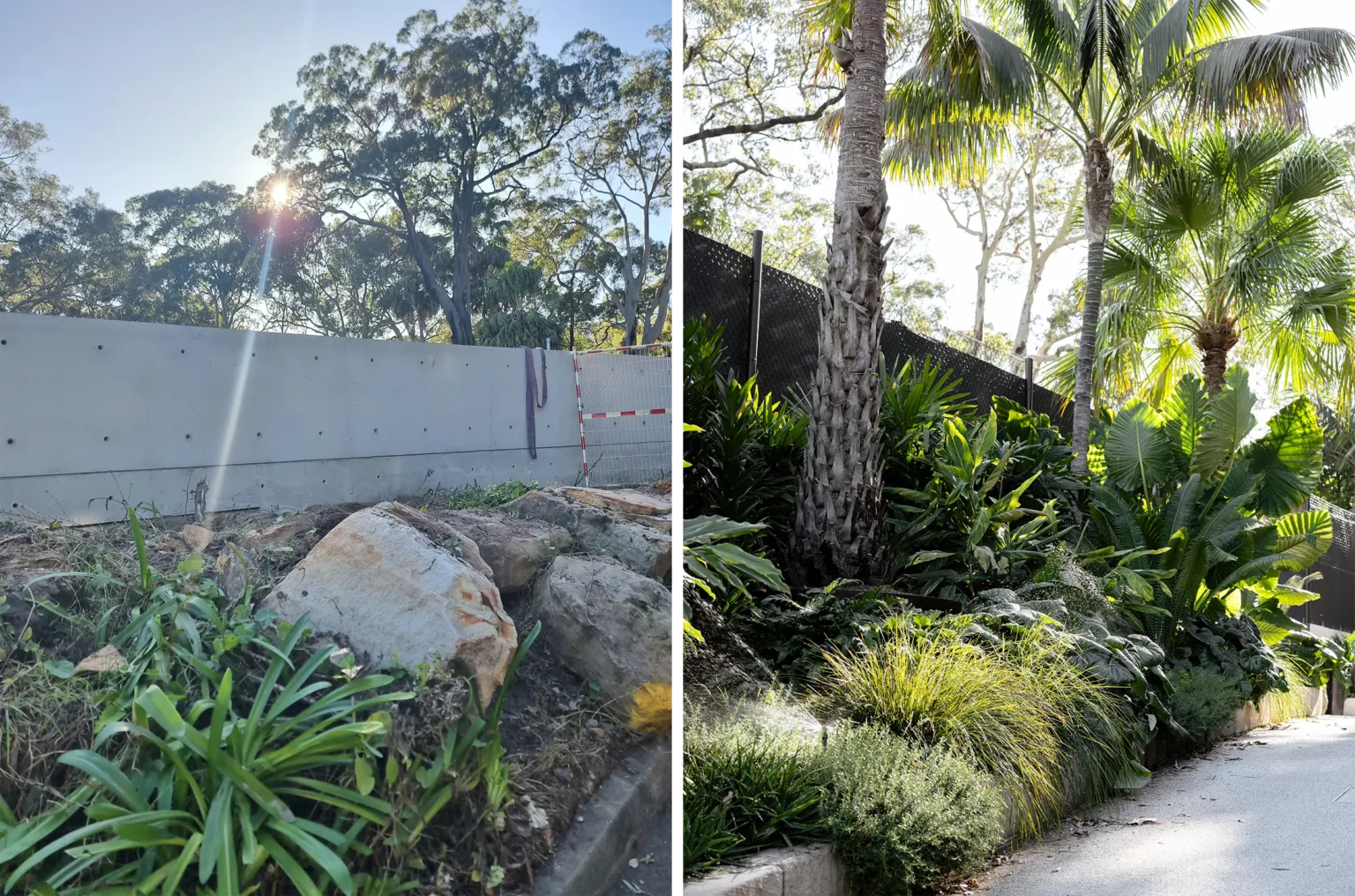
One of the primary challenges of this site was its geology. The property consisted predominantly of exposed bedrock, with extremely limited natural soil depth. These conditions can significantly restrict planting opportunities, particularly when incorporating advanced trees or feature specimens.
For many Sydney landscape design projects, shallow soil profiles are a common constraint, but they require innovative and highly considered solutions. The clients sought a sense of grandeur and maturity in the garden, with a planting palette that would complement the existing vegetation and enhance the new architectural elements.
CREATING SOIL DEPTH WITH RAISED PLANTERS
To address the limited soil conditions, Nelson Thomas introduced raised planters along the driveway. These custom-designed planters provided the necessary depth to support advanced palms and establish a strong visual statement upon arrival.
To immediately create impact and a sense of established gardens, 6-metre-tall palms were craned into position. Installing advanced palms is a strategic landscape design technique that delivers instant maturity, structure, and presence, particularly important in luxury residential landscaping where first impressions matter.
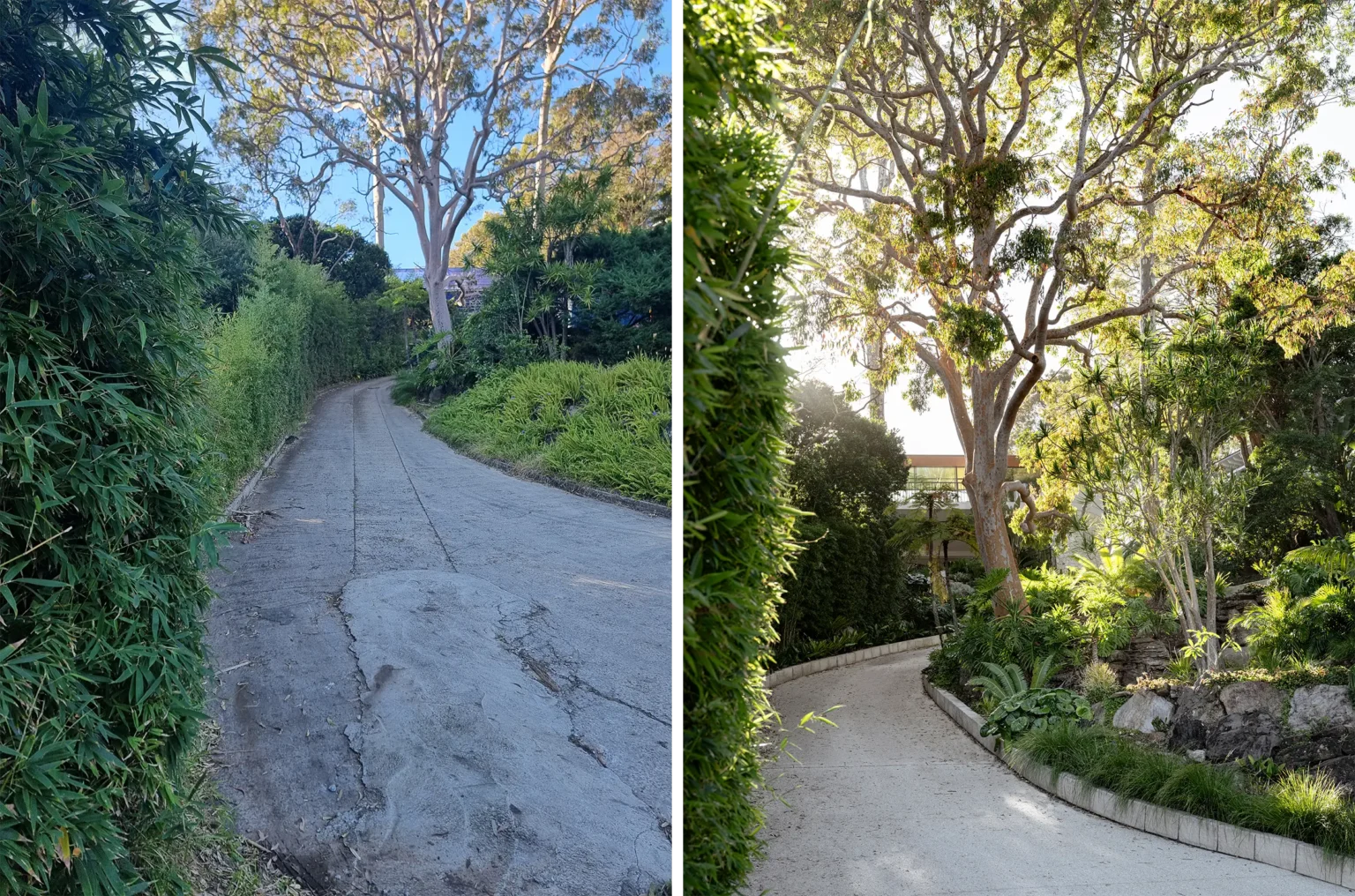
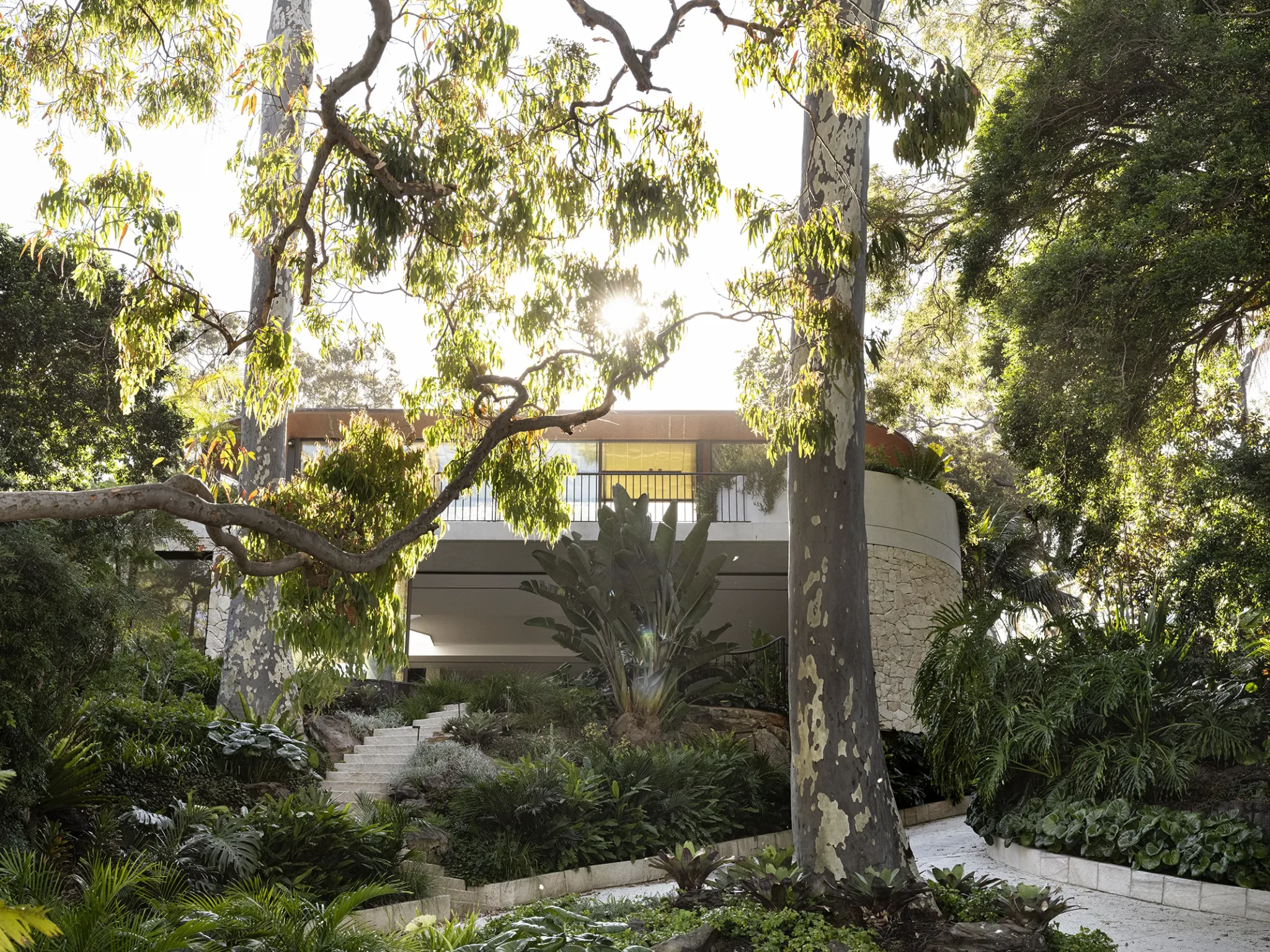
The result is a dramatic and welcoming driveway sequence that enhances the overall sense of arrival.
INTEGRATING ARCHITECTURE AND LANDSCAPE
Further down the property, worn and weathered steps were replaced with substantial sandstone blocks. This not only improved circulation between the tennis court, pavilion, and surrounding areas, but also reinforced a natural material palette that sits comfortably within the site’s context.
A raised timber platform was carefully designed to ensure existing tree root systems remained undisturbed. Protecting mature trees is a critical consideration in high-end landscape architecture, as an established canopy contributes significantly to the long-term character and value of a property.
PLANTING FOR SHALLOW SOIL CONDITIONS
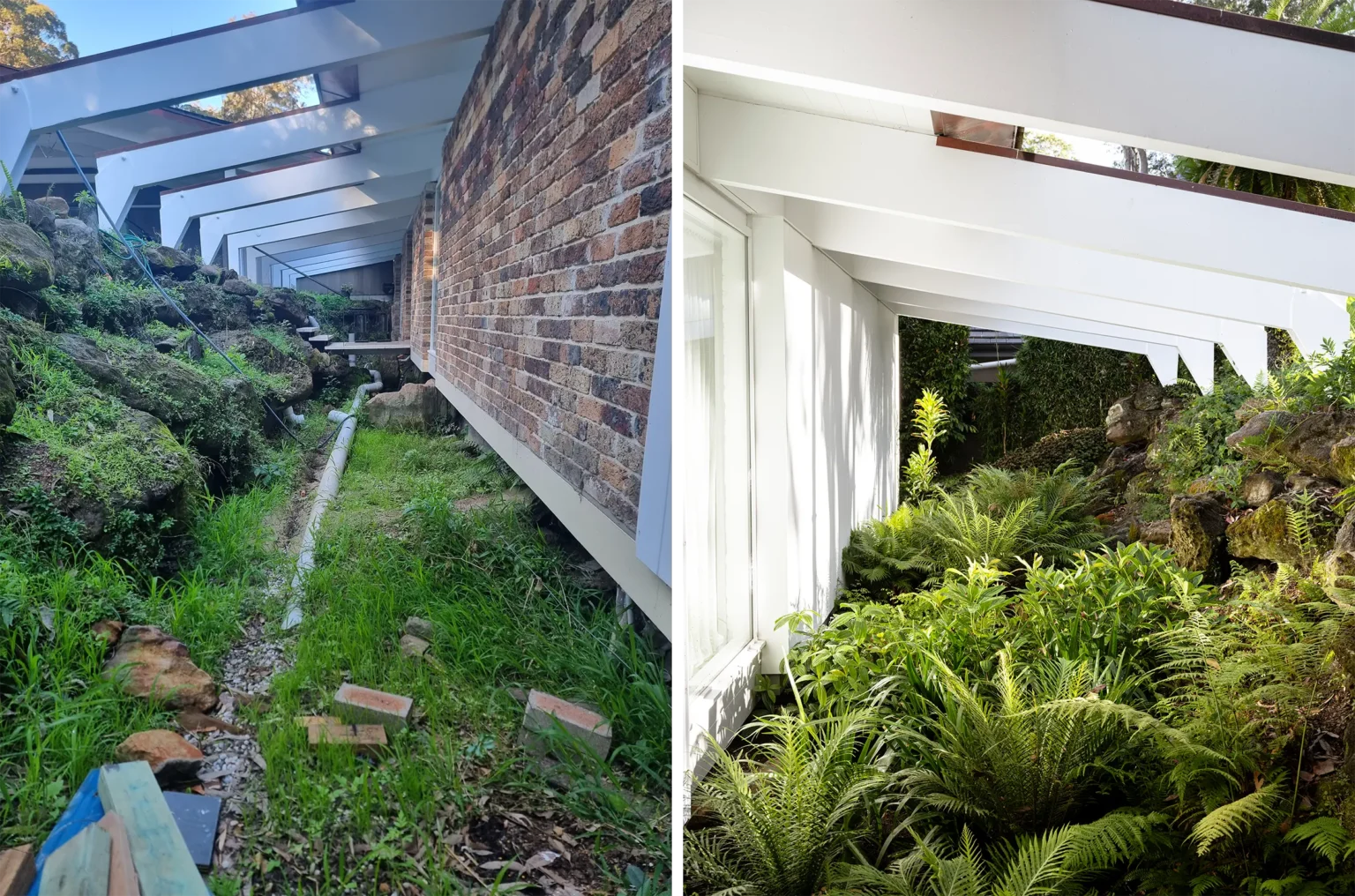
In areas where rock removal was not possible and soil depth remained minimal, cascading and spilling plant species were specified. These softer planting forms drape over rock edges and hard surfaces, reducing visual harshness and creating a layered, naturalistic effect.
Selecting plant species suited to shallow soil conditions is essential when designing landscapes on challenging terrain. By working with the site’s natural constraints rather than against them, the garden achieves a seamless integration with the surrounding vegetation.
A COHESIVE AND ELEVATED LANDSCAPE OUTCOME
Despite the complexities of exposed bedrock and limited soil depth, this project demonstrates how considered landscape design can transform even the most challenging sites. Through raised planters, advanced tree installation, material refinement, and strategic planting, the garden now blends effortlessly with the existing environment while elevating the new architectural additions.
The result is a refined, established landscape that enhances both the tennis court pavilion and the broader residential setting, delivering a sense of arrival, permanence, and understated luxury.
Related projects
The Pavillion | Avalon